Worlds that stay true while stories grow on their own.
We build LLM-driven game worlds where no one writes the plot: characters act on
private knowledge, and a world agent owns the canonical state, validates every consequence,
and closes every turn. These papers are the theory behind WorldLines.
One argument, three proofs—define the world→scale the agents→prove it's architecture
01 · Define
PUBLISHED · CHI PLAY COMPANION '26ACM · DOI 10.1145/3800965.3834285 · arXiv:2606.16014
From Character Role-Play to Orchestrated Reality: LLM-Driven Game World Simulation as a Parameterized-Action POMDP
Yuhang Huang, Chenmiao Li (The University of Tokyo) · Chaowei Fang (Independent)
Most LLM role-play keeps continuity implicit in dialogue history. We treat it as an
architectural choice instead: the world is a canonical object owned by a single orchestration
agent — a Game Master. We formalize the game world as a Parameterized-Action POMDP
(state as a tree of canonical JSON entities, actions as intent + structured parameters)
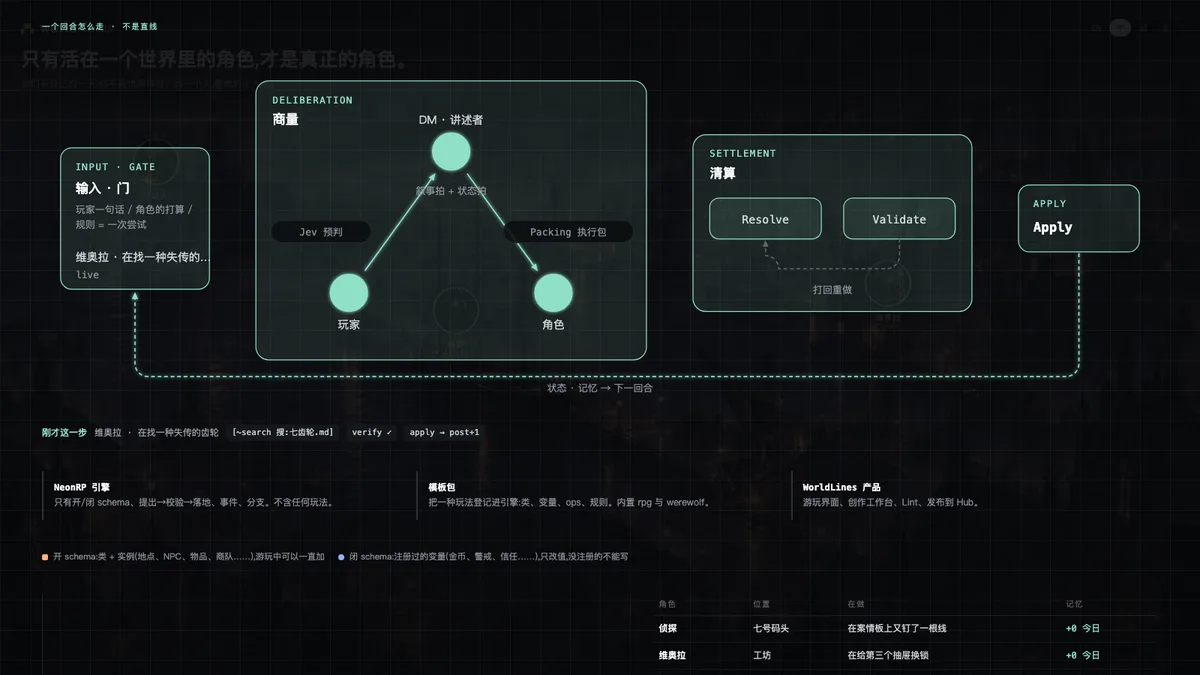
and drive transitions with a Plan–Diff–Validate–Apply pipeline that commits
schema-validated, content-hashed deltas. The world remembers — independently of what the
narrator says.
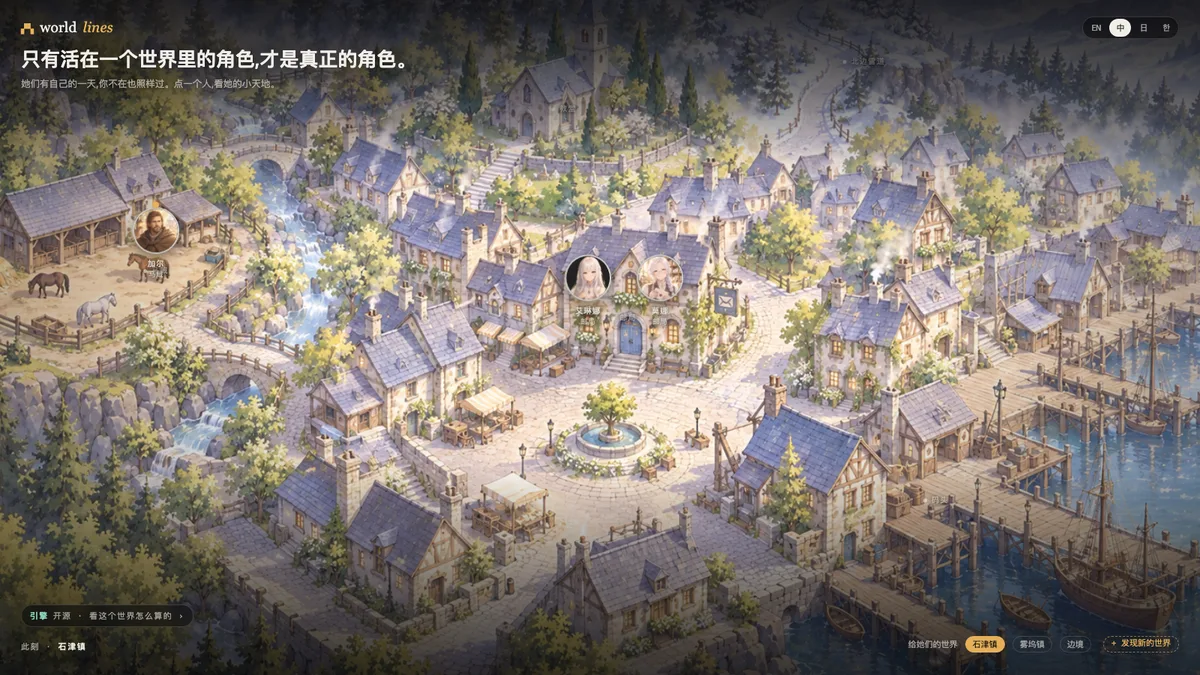
Concept · one writer holds the pen — every action passes validation before it becomes world state
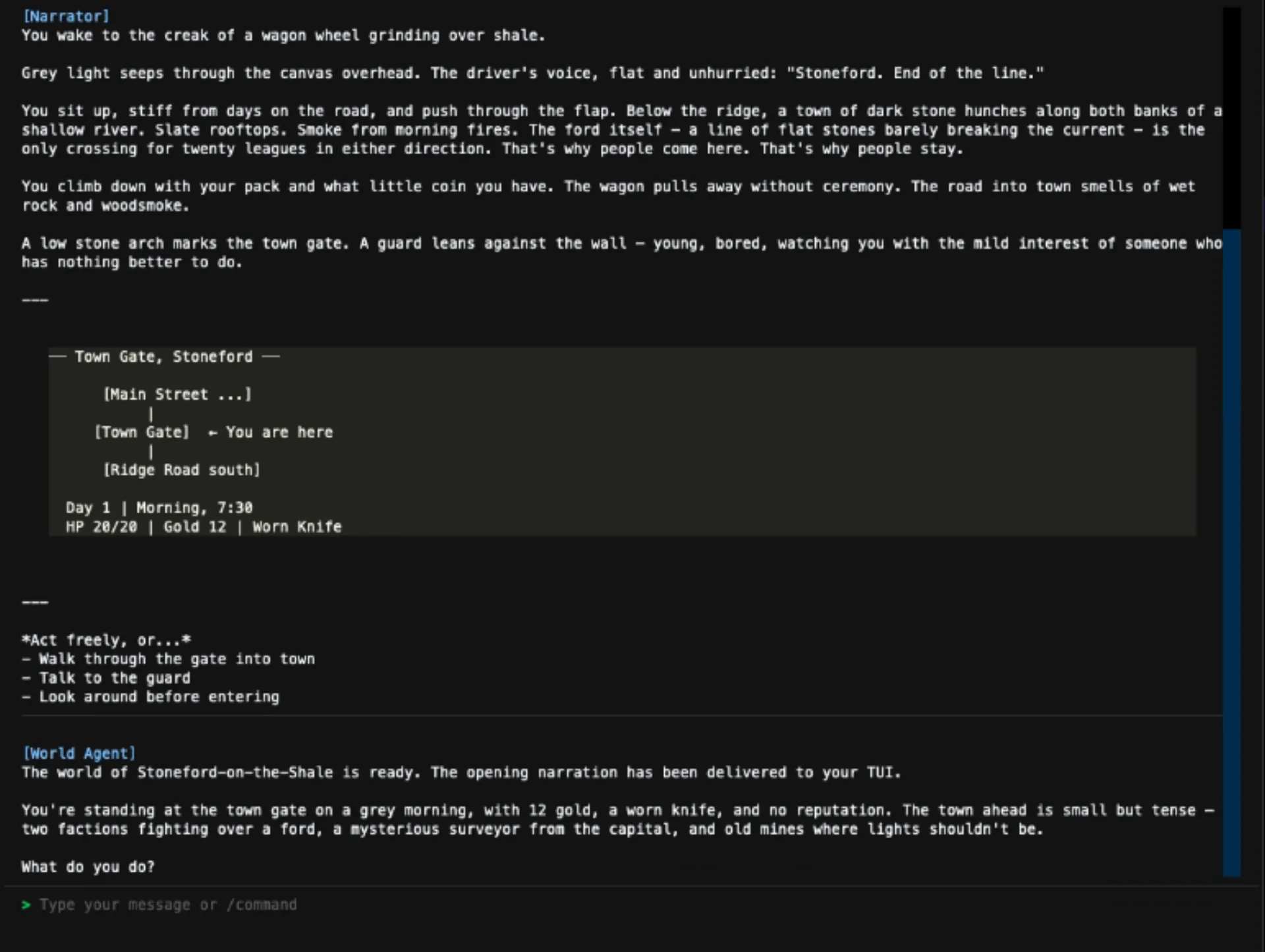
From the paper · narrator renders, world agent keeps the books
Multi-Agent LLM Simulation for Living Game Worlds: Coordinating World, Soul, and Player Agents over a Pub/Sub Message Bus
「"生きた"ゲーム世界のためのマルチエージェントLLMシミュレーション」— with the playable multi-agent world 時間陣 (Jikanjin)
Yuhang Huang, Chenmiao Li (The University of Tokyo, equal contribution) · Chaowei Fang (Independent)
One prompt playing narrator, character, and referee at once is why long sessions fall
apart. This system paper splits the job across three agent roles that meet as peers on a
pub/sub message bus: a world agent that owns canonical state and closes each turn,
M concurrent soul agents with personas of their own, and N player agents
rendering a private view per player. Souls run in a bounded pool; the world agent is the single
writer, committing schema-validated turns. Agents exchange only transport-agnostic JSON —
distribution is designed in, not bolted on.
Concept · three roles meet as peers — only the world agent writes
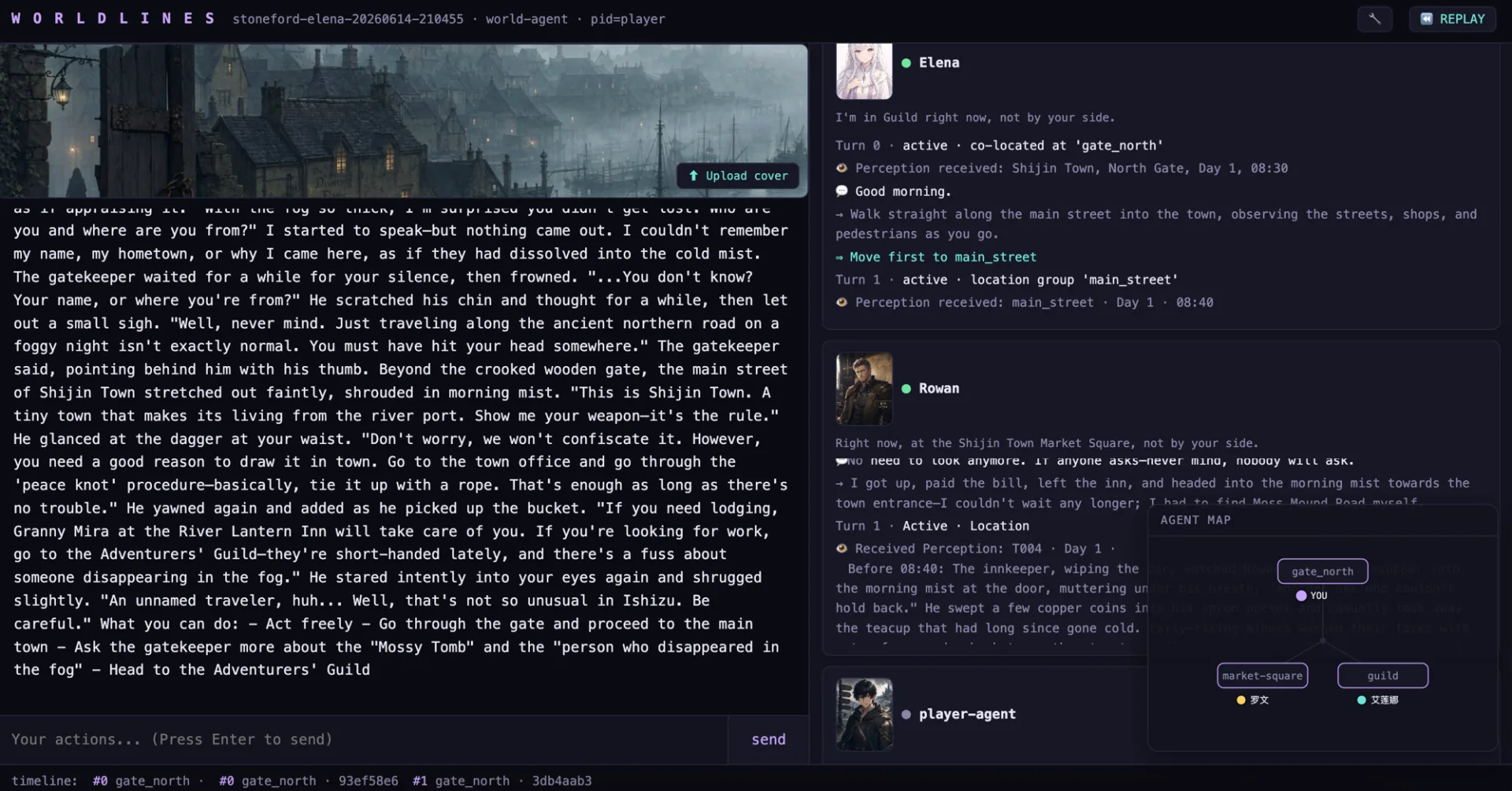
Hub, live · every soul its own agent — world agent narrates, agent map tracks the cast
RP-Worlds: An Architecture for Unbounded yet Consistent World Simulation via PA-POMDP
Play expands the canonical world itself — validated world growth without drift
Ludic Dynamics research · details withheld during anonymous review
World growth has so far been treated as unconstrained generation rather than a validated state transition: LLM-agent worlds are structurally fixed (the state evolves, the world cannot grow), while free-form LLM worlds grow but drift. The RP-world makes growth itself a validated transition — a world-agent, single writer of a typed entity tree (a PA-POMDP), admits new places, inhabitants and relations only after commit-time validation. Six story-complete worlds, three model families: contradictions eliminated where the unvalidated twin drifts universally; effective state dimensionality grows past fixed-extraction ceilings at zero contradictions; and a transcript-only LLM judge still prefers the drifting baseline — fluent prose conceals state drift.
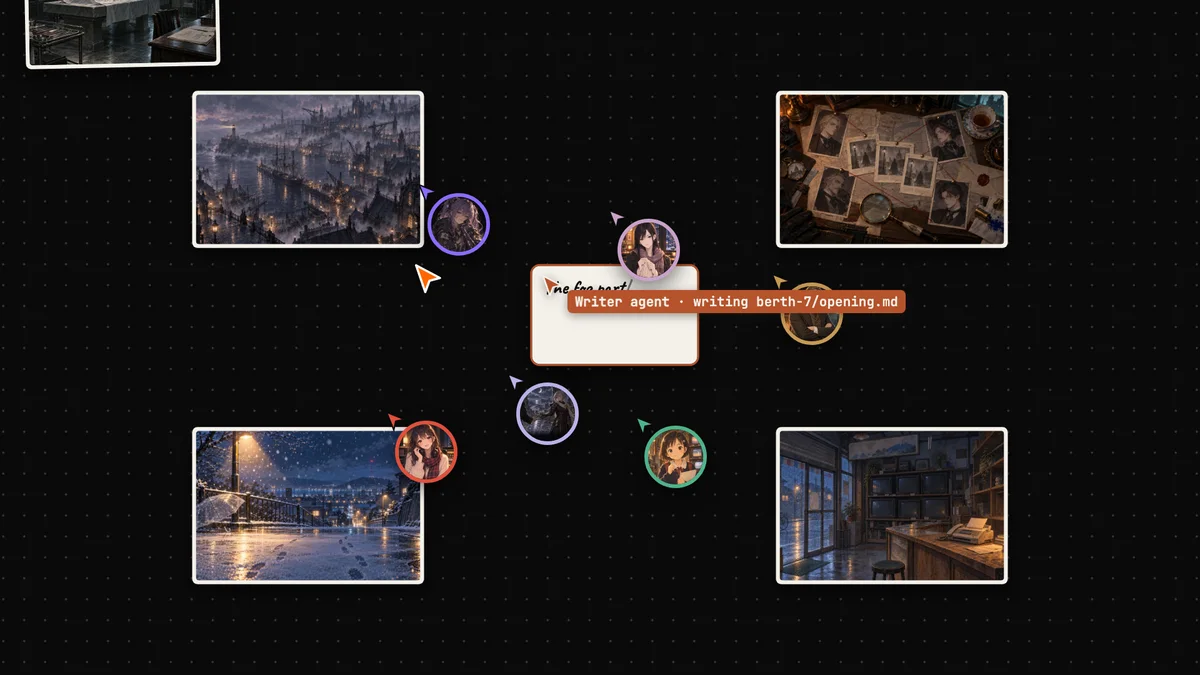
Stylized sketch — not a paper figure · quantitative results locked until review ends